New Hair Institute founder Dr. William Rassman answers your hair loss questions daily at Balding Blog. 

Hair Loss Treatment at NHI

NHI Master Plan

For more detailed information on the NHI Master Plan please refer to the article Patient Evaluation and Surgical Planning in the Medical Publications section and Chapter 9 in The Patient's Guide.

The essence of the "Master Plan" is to always consider that the patient may eventually go on to have extensive hair loss. By keeping this in mind during the surgical planning, the patient will never be caught "short of hair" in the long-term, and will always look natural.

The decisions that go into this planning are quite complex, but in the most general terms, it involves the following:

  1. Framing the face as the highest priority.
  2. Providing coverage for the front and top of the scalp before the crown.
  3. If the crown is transplanted early, be certain that there is enough hair in reserve for the front.
  4. Have each surgical procedure "stand on its own" with respect to looking natural.
  5. Transplant in large sessions.
  6. Use only surgical techniques that maximally conserve donor hair.
  7. When appropriate, use medication in conjunction with surgery, but never rely on the medication to work.

The following is a very brief discussion of these issues. Since the Master Plan is taken into account in all of our decisions, the ideas are integrated into all of our writing. Please refer to the references for more detailed information.

1. Framing the Face

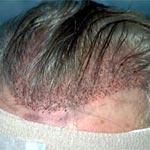
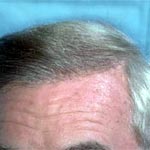
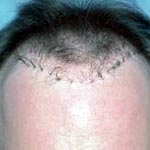
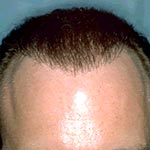
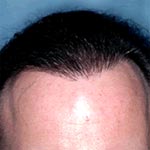
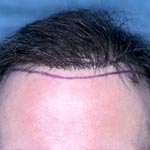
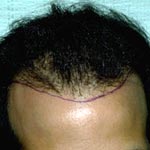
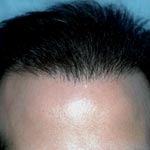
For the majority of patients, establishing the frontal hairline is the single most important function of the hair transplant as this frames the face and restores balance to the patient's facial features.
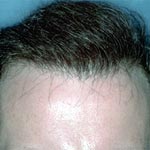
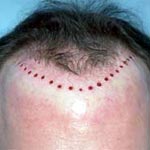
The Master Plan dictates that the position of the hairline be appropriate for the patient's lifetime. This can be assured by placing it in its normal, mature position. It should not be placed lower. On the other hand, the common practice of creating a hairline significantly above the mature hairline position with the intention of lowering it in a subsequent procedure should be avoided.

If the intent is to conserve hair in anticipation of a very limited donor supply, one should still maximize the cosmetic impact of the surgery by creating more recession at the temples or not extending the transplant as far back toward the crown. However, the position of the mid-portion of the frontal hairline should not be compromised, as this defines the "look" of the individual. Creating a hairline too high (in the hope of conserving donor hair) only accentuates the patient's baldness by enlarging the forehead and distorting the normal facial proportions.
2. Providing Coverage for the Front and Top of the Scalp
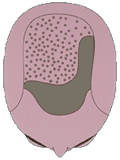
Another key element of the Master Plan is to be able to provide coverage to the front and top of the scalp in all cases, and the crown if there is adequate donor supply. The amount of hair needed to cover the front and top of the patient's scalp will obviously vary depending upon the extent of baldness. However, there should always be an attempt to cover these areas in the first session, even if the coverage is relatively light.

3. Crown Coverage

In general, covering the crown should not be a goal of the first session, but should be addressed after the cosmetically more important front and top have been adequately transplanted. Since the front and top of the scalp are a single cosmetic unit, the transplant may stop after this area has been treated. The patient can then evaluate for himself the adequacy of coverage from the first procedure, and if he desires more fullness or greater density, a second session can be used to supplement the area transplanted in the first.

When crown coverage is attempted in the first session, the patient's options may be more limited, and the ability to produce an aesthetically balanced transplant may be diminished. The crown should be transplanted only if the doctor is secure that there are enough donor reserves to transplant the front and top in the event that those areas become bald.

4. Each Procedure should "Stand on its Own"

According to the Master Plan, barring significant further hair loss, the patient should be able to stop after each session and look completely natural. In other words, the hairline should be soft and feathered after one session and the transplant should look natural from all angles and views. A NHI physician will never say to you "I know the grafts look a little large, but just wait, after one more session it will be fixed." A doctor should not have to correct his own work. He should get it right the first time. This doesn't mean that the final density can be achieved after one session or that other procedures won't be needed. What it means is that each session should appear natural from the outset and be able to stand on its own.

The second part to this is that the entire area to be covered should be transplanted in each session. The old practice of performing the transplant in "sections" rather than all at once, should be avoided since this makes the patient look like "a work in progress" when, instead, he could have his transplant completed and get on with his life. (Please see: Fast Track)

5. Transplant in Large Sessions

The ability to safely transplant large number of grafts in a single session is one of the most important advantages of using follicular units. Not only do large sessions enable each procedure to stand on its own and allow the transplant to be completed in a shorter time frame, but they also conserve precious donor hair by minimizing the number of times hair has to be harvested from the donor area (Please see: Megasessions).

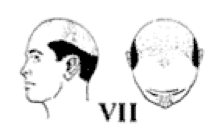
The following chart illustrates the number of follicular unit grafts that we commonly transplant in the first session arranged according to the patient's specific Norwood Classification. (Please see: Assessing Hair Loss).

Norwood ClassFollicular Units
3800-1100
3 Vertex800-1300
3A1300-1600
41100-1800
4A1700-2100
51500-2300
5A1800-2400
62000-2600
72000-2800

If there is no additional hair loss, the second session is generally smaller than the first. In the second session, we usually transplant between 60-90% of the number of follicular units used in the first session, although this can vary depending upon the particular needs of the patient. If there were a third session, this would generally be 60-90% of the second.

The range of the total number of follicular unit grafts needed for a complete restoration varies greatly from person to person and depends upon a wide range of factors including the extent of balding, the patient's hair characteristics and, of course, the patient's goals. The following chart gives you a general idea of the number of individual follicular unit grafts needed for a complete restoration for patients in each Norwood Class.

Norwood ClassFollicular Units
3900-1500
3 Vertex900-2000
3A1400-2200
41200-3000
4A1800-3600
51700-4000
5A2000-4400
62200-5600
72200-6000

6. Maximally Conserve Donor Hair

The success of a "Master Plan" depends upon maximizing the donor supply in order for the restoration to look as full as possible and to have enough hair available to cover all the planned areas of the scalp.

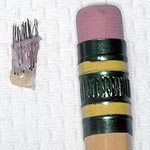
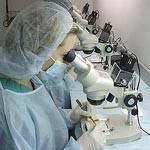
Follicular Unit Transplantation maximizes the donor supply through:

These three aspects of follicular unit transplantation are essential to give the best possible cosmetic result. Please click on these sections for more information.

7. Never Rely on Medication in the Surgical Planning

Medications such as Rogaine (Minoxidil) and more important Propecia (Finasteride) are playing an increasingly important role in managing patients with hair loss. However, at this point in time, drugs can not be counted on for long-term effectiveness. In addition, their long-term safety profiles are still unknown.

Because of this uncertainty, it is prudent for physicians not to rely on these medications as part of any "Master Plan." What this means is simply that the surgery should be performed under the assumption that the patient will not be using medication. Any benefit from medication will therefore be a "bonus" rather than essential for the transplant to look natural or complete. As we gain more long-term experience with these relative new drugs, this relatively conservation position will undoubtedly change. (Please see: Medications).

Back to Main


© 2008 New Hair Institute.    www.newhair.com